Affiliate Marketing Guide: How It Works, Top Platforms & Real Examples 2024
Learn how affiliate marketing works, compare top platforms like Amazon Associates and ClickBank, and see real examples. A beginner-friendly 2024 guide w...
Affiliate Marketing Guide: How It Works, Top Platforms & Real Examples 2024
Key Facts
- US affiliate ad spend hit $10.72 billion in 2024, driving $307.27 billion in ecommerce per EMARKETER.
- Affiliate campaigns deliver a 12:1 return on ad spend, versus Google Ads' $3.31 per $1 spent according to Awin.
- Affiliate-referred customers show 21% higher order values and 21% higher repurchase rates reports Awin.
- The global affiliate industry reached $18.5 billion in 2024 and is projected to hit $31.7 billion by 2031 per Awin statistics.
- 78% of affiliates rely on organic search as their primary traffic source according to Awin.
- A 20.64% global invalid traffic rate puts roughly $37 billion in US ad spend at risk annually reports Optimise Media.
- Physical goods typically pay 1–5% commissions, while digital products often pay 20–50% or more per a network comparison guide.
Why Affiliate Marketing Deserves Your Attention in 2024
Paid ads keep getting pricier and harder to target. As Michelle Peterson, CMO of Kendra Scott, put it in EMARKETER's coverage, "Consumer acquisition costs have gone up. Data is harder and harder to access." Meanwhile, affiliate marketing quietly crossed a milestone: US affiliate ad spend hit $10.72 billion in 2024, the first time it's passed $10 billion, and it drove $307.27 billion in ecommerce along the way.
That's the appeal of affiliate marketing in one sentence: you pay only when something actually happens. Investopedia describes it as a pay-for-performance arrangement where a business pays third parties a commission only when they generate a sale or another desired action. The advertising cost, if there is one, sits with the affiliate, not with you. Compare that to the average Google Ads return of $3.31 per $1 spent, versus the 12:1 ROAS affiliate campaigns deliver, and the economics start to look very different.
The numbers back this up beyond ROI:
- Affiliate-referred customers show 21% higher average order values and 21% higher repurchase rates, per Awin's industry statistics.
- US affiliate spend is projected to grow 47.4% by 2028, reaching roughly $16 billion, nearly double the $9.56 billion recorded in 2023.
- Globally, the industry was valued at $18.5 billion in 2024 and is projected to reach $31.7 billion by 2031.
- Affiliate marketing already drives 16% of all global ecommerce sales.
So why doesn't it get more attention? EMARKETER analyst Max Willens calls affiliate "one of the most under-discussed and underappreciated spending areas in media and advertising." That's good news for you. Less hype means less saturation than the channels everyone talks about at every conference.
It's also why 80% of brands and agencies now view affiliate marketing as an important revenue source, and 46% expect its importance to keep growing. Whether you're a business owner looking for a lower-risk customer acquisition channel or a creator building an income stream, the model works from both sides of the table.
At Worqd, we see this shift firsthand with clients whose paid acquisition costs keep climbing. Performance-based channels like affiliate programs fit neatly into a broader growth plan because they don't compete with your ad budget, they complement it. If you only pay for results, every dollar spent has a built-in accountability that most of digital marketing lacks.
The pay-for-performance model is the core reason affiliate marketing deserves a hard look in 2024. You're buying outcomes, not clicks, and in a year when ad costs are rising and targeting is getting murkier, that distinction matters more than it has in a decade.
How Affiliate Marketing Works: The Three Players, Payment Models, and Affiliate Types
Affiliate marketing sounds simple until you realize it's a $18.5 billion global industry with its own rules about who gets paid, when, and for what. Understanding the structure underneath it is what separates affiliates who guess from affiliates who earn.
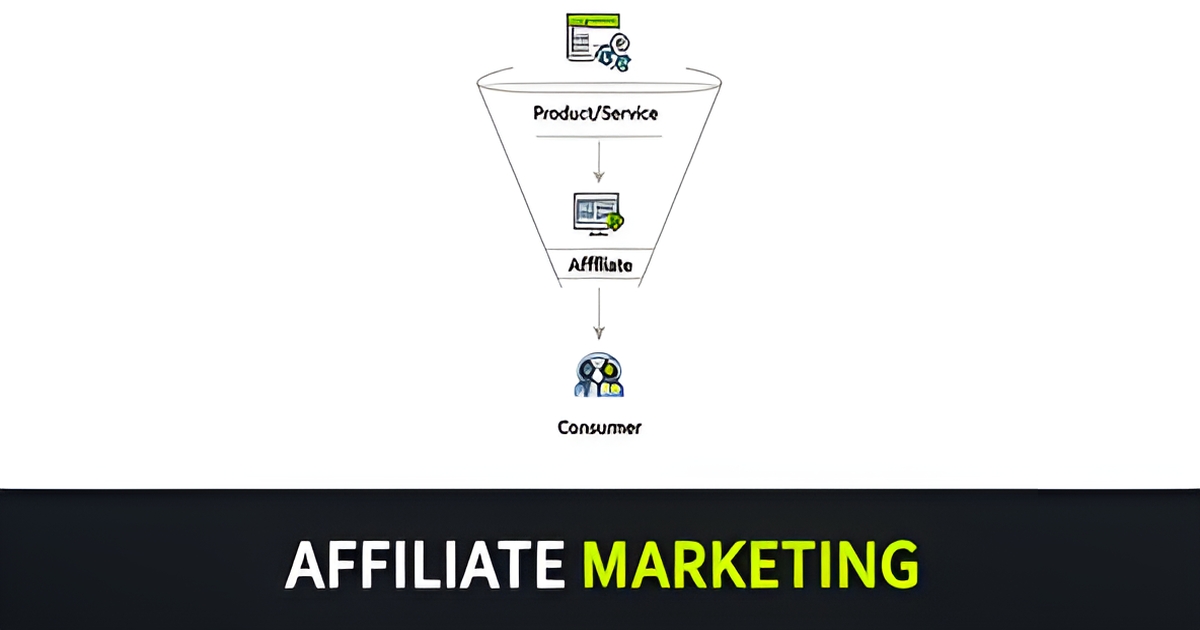
Every affiliate arrangement, from Amazon Associates to a niche blog monetized through ShareASale, involves the same three roles. The merchant (sometimes called the advertiser or brand) creates the product and agrees to pay commissions. The affiliate promotes that product through tracked links, content, or ads. The consumer clicks, buys, and completes the loop.
According to Investopedia's definition, affiliate marketing is a pay-for-performance program where "the act of selling is outsourced across a vast network." That framing matters: the merchant only pays when something real happens, and the affiliate carries the advertising cost. It's why the return on investment is high, and why affiliates treat it as a source of passive income once a campaign is running.
There are three ways merchants compensate affiliates, and the differences shape everything about your strategy:
- Revenue sharing (cost per sale): the affiliate earns a percentage of each sale. IMD's research calls this the most popular model, and it dominates product reviews, email marketing, and long-term content plays.
- Cost per action (CPA): payment for a specific action, like a qualified lead or signup, rather than a purchase.
- Pay per click (PPC)
- Pay per click (PPC): payment for traffic itself. It's now the least common model, and there's a historical reason for that.
Early affiliate programs paid per click or per impression, which created an obvious loophole: clicks could be faked. As Investopedia notes, this structure was vulnerable to click fraud, and the industry responded by shifting toward commissions on actual sales or qualified leads. Fraud hasn't disappeared; current data shows a global invalid traffic rate of 20.64%, with roughly $37 billion in US ad spend at risk annually. Paying only for results simply aligns incentives better.
Not all affiliates promote products the same way. Investopedia's widely cited taxonomy sorts them into three tiers:
- Unattached: no genuine connection to the product. The affiliate runs ads or links with no authority or usage claim. Low trust, low effort.
- Related: the affiliate has niche expertise and audience relevance, but doesn't claim to use the product. A tech blogger reviewing gadgets fits here.
- Involved: the affiliate actually uses the product and promotes it from experience. Highest trust and conversion, but the affiliate's reputation rides on every recommendation.
If you're building affiliate income as part of a broader growth plan, the involved model is where the durable returns live. It's the same logic we apply at Worqd when building demand generation: trust converts, and the numbers back it. Affiliate-referred customers show 21% higher average order values and 21% higher repurchase rates than other customers, and campaigns average a 12:1 return on ad spend. Pick your model and your lane deliberately, because both determine what you earn.
Top Affiliate Platforms and Programs Compared
Choosing the right platform is one of the first real decisions you'll make as an affiliate, and it matters more than most beginners realize. Commission rates, cookie windows, and payout thresholds vary widely between networks, and the right fit depends on your niche and how you plan to drive traffic.
Here's how the major programs compare using verified program data:
| Platform | Commission | Cookie Window | Key Details |
|---|---|---|---|
| Amazon Associates | Up to 10% | 24 hours (90 days if added to cart) | Millions of products; commissions paid ~60 days after month-end; $10 minimum payout |
| ClickBank | 25% default revenue share (sellers can set higher) | Varies by seller | Operates in 150+ countries; strong for digital products and recurring subscription commissions |
| ShareASale | Varies by merchant | Varies by merchant | Thousands of merchants across fashion, home goods, technology, and finance; $50 minimum payout, processed monthly |
| eBay Partner Network | Up to 4% | 24 hours | Commission earned when a buyer bids or purchases within 24 hours of your click; auction bids qualify if won within 10 days |
| Etsy | Varies | Varies | Requires affiliates to be 18+ with an active website; sellers can't earn commissions on their own products without special permission |
A few patterns worth noticing. Physical goods typically pay 1–5%, while digital products and high-ticket items often pay 20–50% or more, according to a network comparison guide. That gap explains why many successful affiliates don't pick just one network.
Affiliate marketing expert Adam Enfroy calls Amazon Associates the "best for beginners" and a "perfect starting point," even though its margins are lower. The reason is simple: conversion. When nearly everything your audience buys is on Amazon anyway, a short cookie window hurts less. His broader advice is to combine big networks for volume with niche networks for higher commissions, since no single network fits every niche.
It's also worth diversifying across multiple affiliate networks rather than relying on one. If a single program cuts its rates or removes a product line, your income doesn't vanish overnight. Spreading across two or three networks is one of the simplest risk-management moves available to you.
Beyond the big five, several other programs come up often in practitioner discussions. Coursera, BigCommerce, and Impact are frequently named among notable options, though their exact terms change often enough that you should check current program pages before committing. Impact in particular has become a common home for SaaS and DTC brand programs as more companies move affiliate management in-house or consolidate onto enterprise networks.
One honest caveat: commission rates are only half the equation. A 10% commission on a product nobody in your audience wants earns less than a 3% commission on something they buy weekly. Match the platform to your content and your readers, not to the biggest number on the comparison chart.
The most immediate proof point for any newcomer is the BuzzFeed Shopping model. By weaving affiliate links into listicles and viral content, BuzzFeed transforms passive readership into measurable commerce, demonstrating that even media-first brands can build a meaningful secondary revenue stream through performance-based partnerships. This approach aligns with the broader industry trend where 31% of top US publishers now rank affiliate marketing as a primary revenue source.
Data from recent industry benchmarks reinforces the financial upside. Affiliate campaigns are delivering a 12:1 return on ad spend, significantly outperforming traditional channels like Google Ads, which averaged $3.31 per $1 spent in 2025. Beyond the initial click, the quality of referred traffic holds up: customers acquired through affiliate links show 21% higher average order values and 21% higher repurchase rates compared to the general consumer base. These metrics explain why 90% of senior marketers across major markets rate affiliate marketing as effective or highly effective, and why 80% of brands view it as an important revenue source.
Not every journey starts at the top, of course. Anecdotal reports from practitioner communities illustrate the range of possibility. One anonymous contributor on a marketing forum described scaling a side project into a steady income stream, reporting earnings of approximately €15,000 per month after iterative refinement of content and offers. It is worth noting that this figure comes from an unverified Reddit post and represents an individual outcome rather than an industry standard; results vary widely based on niche, traffic quality, and promotional strategy.
These examples, from established media properties to individual creators, affirm that affiliate marketing functions as a versatile engine for growth. Whether through a curated content site or a niche social following, the model rewards relevance and audience trust. For those looking to explore the space, starting with a reputable network like Amazon Associates provides a low-barrier entry point, while diversifying across multiple programs can help mitigate risk and tap into different commission structures.
Start your affiliate marketing journey by exploring our recommended platforms and signing up for our newsletter for exclusive tips.
Your Beginner Action Plan: Getting Started and Avoiding the Pitfalls
You've read the stats, compared the platforms, and seen what's possible. Now it's time to actually start, and the good news is that the entry bar is low. The bad news is that most beginners quit because they skip the boring fundamentals.
Start with a niche, then start with Amazon. Pick a topic you can write about for a year without losing interest, because affiliate marketing for beginners is a content game before it's a commission game. Once your niche is set, affiliate experts recommend Amazon Associates as the most accessible entry point. Commissions run up to 10%, the cookie window is short (24 hours, extended to 90 days if the shopper adds to cart), but the product catalog is enormous and conversion is easy because everyone already trusts Amazon.
Make organic search your main channel. According to Awin's industry statistics, 78% of affiliates rely on organic search as their primary traffic source, and 74% of marketers say content marketing directly generates demand. Paid ads can work, but they eat margins fast when you're earning 1–5% on physical goods. Write honest reviews, comparisons, and buying guides, then diversify across networks like ClickBank (25% default revenue share on digital products) and ShareASale once you have traffic.
Your first 90 days, in order:
- Choose a niche and set up a simple site or content channel.
- Join Amazon Associates and drop your first links into real, useful content.
- Publish consistently and target long-tail search terms buyers actually type.
- Add a second network (ClickBank or ShareASale) once you have steady traffic.
Now the honest part. Fraud is a real problem in this industry. Optimise Media reports a global invalid traffic rate of 20.64%, which puts roughly $37 billion in US ad spend at risk annually. As an affiliate, that means buying traffic is riskier than it looks, and it's one more reason to build on organic search.
Mobile deserves a similar reality check. Mobile accounts for 62% of global web traffic and 57% of affiliate-driven purchases, yet it converts at just 2.1% versus 3.5% on desktop. Don't panic-optimize for mobile at the expense of substance; make sure your pages load fast and your links are easy to tap, then keep writing.
The biggest looming threat is AI search. When OpenAI added product recommendations to ChatGPT, analysts flagged it as a major risk for affiliate sites that depend on Google traffic. The affiliates who survive will be the ones whose content is genuinely worth reading, since generic review pages are exactly what AI answers replace. Original experience, real photos, and first-hand product knowledge are your moat.
If you'd rather not navigate all of this alone, Worqd helps businesses grow traffic and leads with SEO and answer-engine optimization, so your content gets found whether people search on Google or ask an AI. Either way, the fundamentals hold: pick a niche, start with Amazon, publish consistently, and diversify.
Start your affiliate marketing journey by exploring our recommended platforms and signing up for our newsletter for exclusive tips.
Frequently Asked Questions
How does affiliate marketing actually work?
How much money can beginners make with affiliate marketing?
Which affiliate platform is best for beginners?
Is affiliate marketing still profitable in 2024, or is it saturated?
What's the biggest risk or downside of affiliate marketing?
What's the best strategy to get started with affiliate marketing?
Why Affiliate Marketing Still Deserves a Spot in Your 2024 Strategy
Affiliate marketing has quietly crossed a major milestone, hitting $10.72 billion in US spend in 2024 and driving over $307 billion in ecommerce, yet it remains one of the most under-discussed channels in media today. The model’s pay-for-performance structure, where businesses only pay when a sale or desired action occurs, delivers a compelling 12:1 ROAS, significantly outperforming traditional paid search, which averaged just $3.31 per dollar spent. Beyond the dollars, affiliate-referred customers show 21% higher average order values and 21% higher repurchase rates, proving the traffic quality is genuinely stronger. With the industry projected to reach $31.7 billion globally by 2031 and 80% of brands now viewing it as an important revenue source, the economics are too significant to ignore. Whether you are a business owner seeking lower-risk customer acquisition or a creator building an income stream, the model works from both sides of the table. The key is starting deliberate: pick a niche, launch with Amazon Associates for its trust and product breadth, prioritize organic search, used by 78% of affiliates as their primary traffic source, and diversify across networks like ClickBank and ShareASale to mitigate risk. Beware the pitfalls, from the 20.64% global invalid traffic rate to mobile’s lower 2.1% conversion rate compared to desktop’s 3.5%, and focus on creating genuinely valuable content that AI search can’t easily replace. Start your affiliate marketing journey by exploring our recommended platforms and signing up for our newsletter for exclusive tips.
Full article content will appear here once published.
)}Want help putting this into action?
Book a Growth Call