Marketing Strategy: A Step-by-Step Framework for 2025
Learn how to create a marketing strategy with a proven framework: situation analysis, positioning, channel plan, and KPIs. Includes examples and a marke...
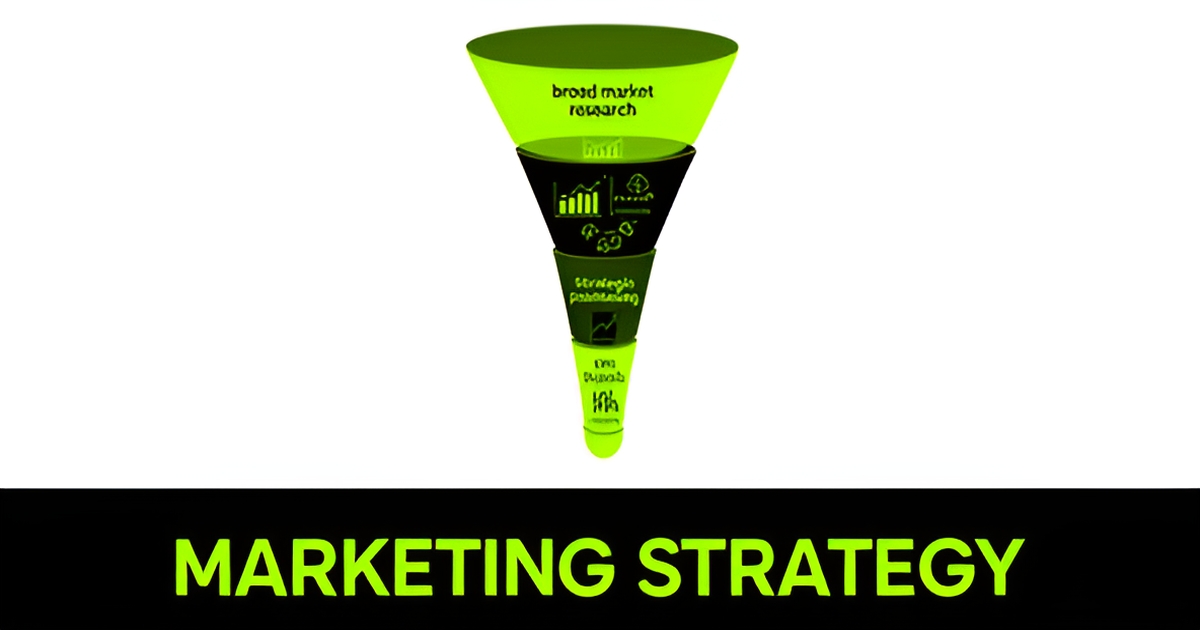
Marketing Strategy: A Step-by-Step Framework for 2025
Key Facts
- [
- "47% of companies still operate without a planned digital marketing strategy according to Smart Insights",
- "78% of US B2C marketing executives admit their tech stacks are siloed according to Salesforce research",
- "Only 31% of marketers are fully satisfied with their ability to unify customer data per Salesforce",
- "75% of consumers are more likely to buy from brands delivering personalized content per Deloitte Digital",
- "63% of marketers now use generative AI, while customer trust in ethical AI use dropped from 58% to 42% per Salesforce",
- "74% of shoppers switched brands in the past year, and 74% will abandon a brand after three or fewer bad experiences per Salesforce",
- "Website/blog/SEO is the #1 ROI channel for marketers, followed by paid social media at 26% per HubSpot"
- ]
Why Most Marketing Strategies Fall Apart (and What the Data Says)
Most marketing strategies don't fail because the thinking was wrong. They fail because the thinking never became a plan anyone could actually execute.
The numbers back this up. According to Smart Insights, 47% of companies still have no planned digital marketing strategy at all. They're running tactics: a campaign here, a channel there, no connecting thread. And even among companies that do plan, the plumbing underneath is broken. Salesforce research shows 78% of US B2C marketing executives admit their marketing and loyalty tech stacks are siloed, and only 31% of marketers say they're fully satisfied with their ability to unify customer data.
That's a problem at any time. In 2025, it's a serious one, because two forces are colliding.
First, AI has gone mainstream inside marketing teams. The same Salesforce data shows 63% of marketers now use generative AI, and HubSpot reports 94% plan to use it in content creation. Second, trust is moving in the opposite direction: customer trust in businesses using AI ethically dropped from 58% to 42%. More capability, less confidence. If your strategy is a loose collection of AI-assisted tactics with no coherent position behind it, that gap lands squarely on your brand.
The stakes are also higher than they used to be. 74% of shoppers switched brands in the past year, and the same share will abandon a brand after three or fewer bad experiences. Loyalty is thin. A scattered approach that produces inconsistent messaging, slow follow-up, or mismatched experiences doesn't just underperform. It actively pushes customers toward competitors.
The pattern shows up across the research:
- Strategy gap: nearly half of companies have no documented plan to coordinate their efforts.
- Data gap: siloed stacks mean no single view of the customer, so personalization and measurement both suffer.
- Trust gap: AI adoption is rising while customer confidence in ethical AI use is falling.
Closing these gaps is exactly why a framework beats a tactic list. A proper marketing strategy framework forces you through the steps that scattered activity skips: a situation analysis of where you actually stand, a clear definition of your target audience, positioning that says why someone should pick you, a channel plan matched to how your buyers actually discover and buy, and KPIs that connect the marketing funnel to revenue. It's the difference between a marketing plan template you fill in once and a working system you improve every month.
At Worqd, we see the consequence of this every week: companies with plenty of activity and no connective tissue, where leads arrive and nobody responds fast enough to convert them. The fix isn't more tactics. It's one connected plan, from first click to booked call, with measurement built in so you know which parts are working. That's what the rest of this framework is built to give you.
The 4-Step Marketing Strategy Framework: From Situation Analysis to Positioning
Every strong marketing strategy starts with two questions most teams skip: where do we actually stand, and who exactly are we for? Skip them and you're guessing. Yet Smart Insights reports that 47% of companies still operate without a planned digital marketing strategy at all.
Step 1: Situation analysis. Before you write a single campaign brief, audit your position. A SWOT analysis gives you the internal picture (strengths, weaknesses) alongside the external one (opportunities, threats), and it works best when paired with a hard look at competitors and a honest segmentation of your customers. Who buys, why, and where do they go when they don't buy from you?
Your situation analysis should cover:
- SWOT: internal strengths and weaknesses against external opportunities and threats
- Competitive analysis: where rivals are winning and where they're exposed
- Customer segmentation: grouping buyers by need, behavior, and value
- Data audit: whether your customer data is unified enough to act on
That last item matters more than most teams realize. Salesforce's research found only 31% of marketers are fully satisfied with their ability to unify data, and 78% of B2C marketing executives admit their tech stacks are siloed. You can't segment customers you can't see clearly.
Step 2: Positioning. Once you know where you stand, define who you serve and what you promise them. Your target audience definition should be specific enough that someone outside your team could picture the buyer. Your messaging should answer one question: why you, and not the alternative?
Here's the tension that makes positioning harder in 2025: personalization pays, but trust is thin. Deloitte Digital's research shows 75% of consumers are more likely to buy from brands that deliver personalized content, and personalization leaders are 48% more likely to exceed revenue goals. But Salesforce found that only 49% of customers believe companies use their data beneficially, down from 60% in 2022.
That means your positioning has to be transparent, not just targeted. Say what you do with customer data. Make the personalization feel like service rather than surveillance. This is where working with a partner who values evidence over hype helps: agencies like Worqd build positioning on what a business can actually prove, not on claims that erode trust the moment a customer notices the gap.
With audience and message locked, shape your marketing mix around the funnel stages those buyers actually move through. Match channels to where your segments discover and decide, rather than spreading budget evenly and hoping. For B2B, HubSpot's data points to SEO and paid social as top ROI channels; for B2C, email, paid social, and content marketing lead. The mix follows the audience, never the other way around.
Done well, these two steps give you a foundation the rest of the plan can stand on: a clear read of your situation, a defined audience, and a position you can defend with proof.
Building Your Channel Plan: SEO, Social, and AI Search
You’ve built the foundation of your strategy, but the battlefield has shifted. Buyers no longer start their journey on Google, they start it in ChatGPT, Perplexity, and AI Overviews. Nearly 30% of marketers have already seen search traffic decline as consumers turn to AI tools for answers, and Kantar’s warning cuts through the noise: if the model doesn’t know you, it won’t choose you. This isn’t a future scenario; it’s happening now, and it rewrites the rules of visibility.
For B2B teams, the playbook starts with the website, blog, and SEO, HubSpot confirms these remain the number-one ROI channel, especially when paired with paid social. But the mix shifts dramatically for B2C, where email, paid social, and content marketing take the top spots. Instagram commands attention from 70% of marketers and delivers the strongest ROI, while TikTok is the platform most planned for 2026, already in use by 57%. The data is clear: you cannot treat all channels the same. A B2B buyer needs deep-dive content and searchable resources, while a B2C shopper discovers and decides on social feeds.
This channel chaos underscores the urgent need for omnichannel integration. Salesforce reports that 78% of B2C marketing executives admit their tech stacks are siloed, yet 88% of retailers say unified commerce will be critical within two years, a gap between recognition and reality that costs customers trust. When data lives in separate islands, personalization suffers. Yet Deloitte Digital confirms that 75% of consumers prefer brands that deliver personalized content. The tension is real: customers want relevant experiences, but only 49% trust companies use their data beneficially. Bridging that gap requires first-party data strategies and explicit consent, not just more tools.
The smartest 2025 strategies treat GEO (Generative Engine Optimization) as SEO’s essential partner. Almost 24% of AI users already rely on AI shopping assistants, and 74% of those users regularly seek AI-driven recommendations. If your content isn’t structured for machine citation, you’re invisible to the new search paradigm. That means moving beyond keywords to structured data, clear answers, and machine-legible content that Large Language Models can parse and surface. It’s not about replacing SEO; it’s about evolving it for a landscape where 70% of ChatGPT queries are unique and rarely seen on traditional engines.
Your channel plan must be intentional, not inherited. Start by auditing where your specific audience actually spends time, B2B buyers converge on search and LinkedIn, while B2C shoppers scroll Instagram and TikTok. Then layer in AI visibility so you’re found regardless of how the query is phrased. The goal is a seamless path from discovery to conversation, whether that starts with a Google search or a chat with an AI assistant. Ready to turn your strategy into results? Explore Worqd's AI-powered marketing services and start building a plan that actually gets executed.
Measurement and Execution: KPIs, Funnels, and Getting It Done
A strategy that never ships is just a nice document. The uncomfortable truth: research from Smart Insights shows 47% of companies still operate without a planned digital marketing strategy, and many of the rest never wire their plan into a working measurement system. Step 4 is where you close that gap.
Start by mapping KPIs to funnel stages, so every number you track answers a real question:
- Top of funnel: impressions, reach, click-through rate, cost per click. These tell you if your positioning and creative are earning attention.
- Middle of funnel: lead volume, lead quality score, cost per qualified inquiry, landing page conversion rate. These tell you if the right audience is raising a hand.
- Bottom of funnel: booked calls, pipeline value, close rate, cost per acquisition. These tell you if marketing actually makes money.
- Post-sale: retention, repeat purchase, share of wallet. These tell you if the whole system deserves more budget.
Resist vanity metrics. A million impressions means nothing if qualified conversations don't move. If a metric can't change a decision, take it off the dashboard. Salesforce's marketing data makes the stakes clear: 74% of shoppers switched brands in the past year, and 74% will abandon a brand after three or fewer bad experiences. Speed and quality of follow-up are funnel metrics, too, and they're often the cheapest place to find lift.
On data: build on first-party information collected with explicit consent. The same Salesforce research shows only 49% of customers think companies use their data beneficially, down from 60% in 2022. Personalization still pays, since 75% of consumers prefer brands that deliver it, but only when you're transparent about what you collect and why. Ask permission, state the purpose, and skip sending sensitive form fields anywhere public.
On AI: use it, then verify it. The research includes documented cases where AI-generated metrics were treated as authoritative without validation, and trust in ethical AI use has dropped from 58% to 42% even as 63% of marketers adopt generative tools. Keep a human in the loop for anything that reaches a client, a report, or a budget decision.
This is exactly how Worqd runs execution: one integrated plan from first click to booked call, AI SDRs qualifying every inquiry in under 60 seconds (including nights and weekends), and continuous creative testing where losing concepts get dropped fast. One plan, one report, no vanity metrics. The lesson generalizes: measure what feeds decisions, respond before interest cools, and test relentlessly.
Ready to turn your strategy into results? Explore Worqd's AI-powered marketing services and start building a plan that actually gets executed.
Frequently Asked Questions
What are the most important steps to build a marketing strategy from scratch?
How do I know if my marketing tech stack is unified enough for personalization?
Why is AI adoption in marketing creating a trust problem with customers?
What channels should I prioritize for B2B versus B2C marketing?
How many steps are in a complete marketing strategy framework?
What should I measure to know if my marketing is actually working?
Your Marketing Strategy Won't Build Itself, But It's Easier Than You Think
A strong marketing strategy isn't a document you write once and shelve, it's a working system: a situation analysis that tells you where you stand, positioning that answers "why you," a channel plan matched to how your buyers actually discover and decide, and KPIs that connect activity to revenue. The data makes the case plainly: 47% of companies still run without a planned digital strategy, and Smart Insights' research shows the gap between planning and execution is where most marketing budgets quietly disappear. Your next step is simple, pick one piece of the framework and start this week: run your SWOT, define one core audience segment, or audit whether your follow-up is fast enough to catch interest before it cools. If you'd rather have one partner run the whole path, from first click to booked call, with fast AI-assisted follow-up and creative that gets tested instead of guessed, that's exactly what Worqd does. Ready to turn your strategy into results? Book a free growth call and start building a plan that actually gets executed.
Full article content will appear here once published.
)}Want help putting this into action?
Book a Growth Call